
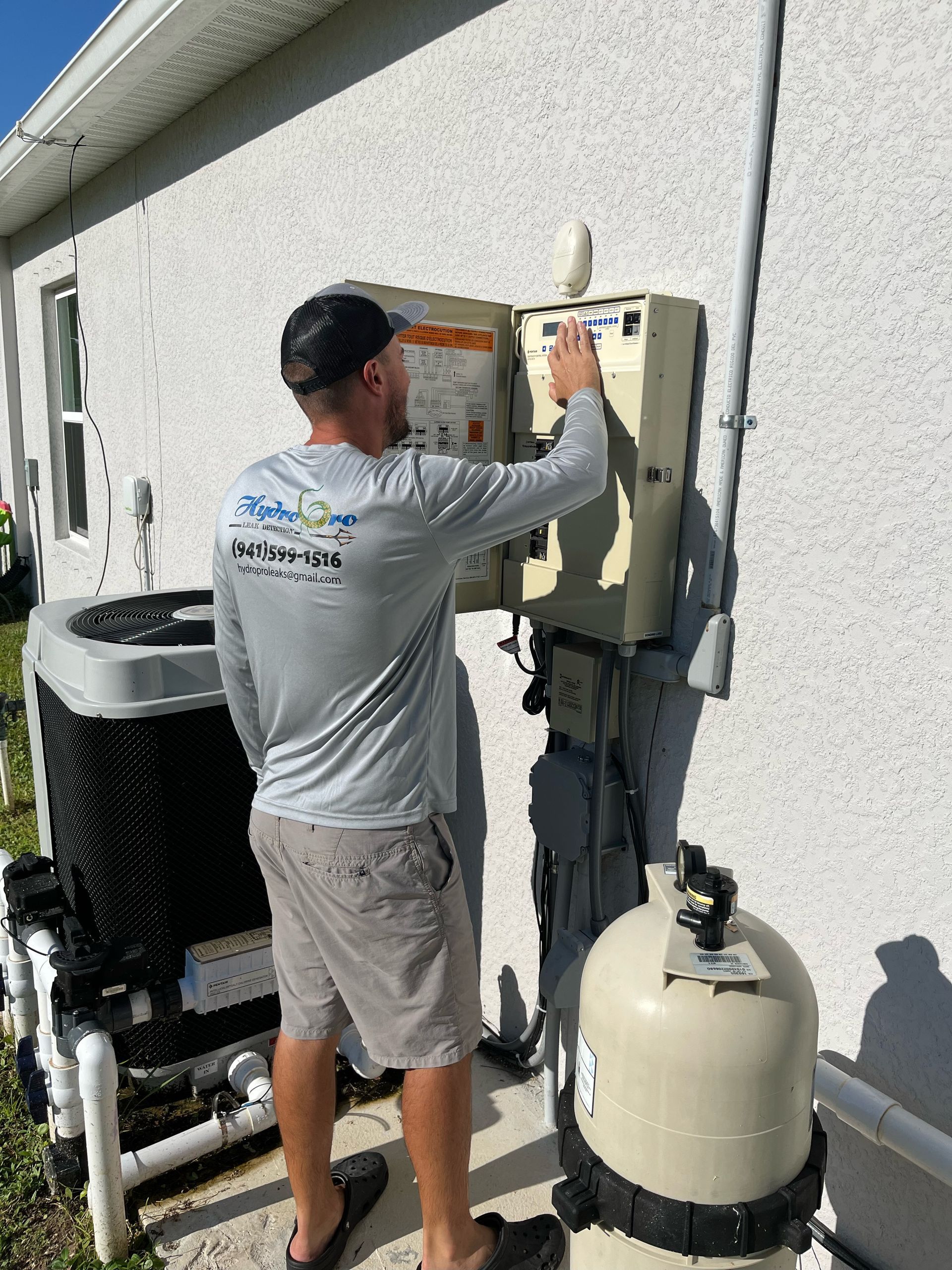
Controls That Adjust Schedules Automatically
Pool Automation Systems in North Port for manual timers, inconvenient adjustments, and inefficient equipment cycles
Smart pool controls synchronize pumps, lighting, heating, and chemical dispensing through integrated systems that adjust schedules based on actual usage patterns and environmental conditions rather than fixed timer intervals. Hydropro Leak Detection, LLC installs automation platforms throughout North Port that allow remote management through mobile apps, replacing outdated mechanical timers and manual switches with programmable interfaces that optimize energy consumption while simplifying day-to-day operation. Growing demand for smart home integration throughout modern Florida properties extends to pool equipment, where app-based monitoring provides real-time status updates and automatic adjustments without requiring physical access to equipment pads.
Installation involves wiring control panels to existing equipment circuits, configuring communication protocols that link pumps, heaters, sanitizers, and lighting into unified networks, and programming initial schedules based on pool size, typical usage frequency, and preferred operating parameters. Systems integrate with variable-speed pumps to run extended low-RPM filtration cycles during off-peak utility hours, activate heating only when temperature sensors detect drops below set points, and sequence lighting for evening ambiance without manual switching. Salt chlorine generators receive automated run-time adjustments that maintain consistent sanitizer levels without daily testing or chemical additions.
Request an automation assessment to determine which manual functions consume unnecessary time or result in inefficient equipment operation.
What Integrated Systems Synchronize Across Pool Equipment
Automation platforms use digital communication between control boards and equipment motors, allowing centralized scheduling that coordinates filtration, heating, and cleaning cycles to avoid simultaneous high-load operation that spikes electrical demand. Temperature sensors trigger heater activation only when needed rather than maintaining continuous operation, while flow sensors detect restrictions indicating filter cleaning requirements before circulation degrades. Chemical monitoring options connect to probes that measure pH and sanitizer levels, automatically dosing corrections through peristaltic pumps that eliminate manual testing and adjustment.
Once automation operates, you'll notice equipment responds to changing conditions without manual intervention, utility costs decrease as systems avoid unnecessary run times, and water quality remains consistent because filtration and chemical dosing occur on optimized schedules regardless of daily routine disruptions. Smartphone alerts notify when cycles complete, when maintenance becomes due, or when system errors require attention, eliminating guesswork about equipment status. Lighting scenes activate automatically at programmed times, transitioning through color sequences or dimming gradually without physical switches.
Upgrades also accommodate future expansion, allowing addition of water features, spillover spas, or deck jets into existing control networks without replacing entire systems. Professional setup ensures proper calibration of sensors, correct equipment addressing within communication networks, and backup programming that maintains operation during power interruptions or network connectivity losses.
Common Questions About This Service
Homeowners exploring automation upgrades typically ask about system capabilities, installation requirements, and practical convenience improvements. These answers clarify what modern pool controls provide.
What functions can automation control beyond basic pump operation?
Automation manages variable-speed pump speeds and schedules, heater temperature set points and activation times, lighting color and intensity sequences, chemical dispenser output rates, and valve actuators that direct flow between pool and spa modes or different water features.
How does automation reduce energy costs if equipment runs similar hours?
Automation reduces costs by running pumps at lower speeds during routine filtration, activating heaters only when temperature drops below thresholds rather than maintaining continuous operation, and scheduling high-load equipment during off-peak utility rate periods where applicable.
What installation work does automation require for existing pools?
Installation connects control panels to equipment circuits at the pad, runs low-voltage wiring to remote sensors or actuators, and configures wireless communication for systems using radio frequency protocols, typically completing within one day for standard residential pools in North Port.
When should I upgrade manual systems to automated controls?
Upgrade when daily adjustments become inconvenient, when equipment runs inefficiently due to fixed timer limitations, when adding new features that complicate manual operation, or when integrating pool controls with broader smart home systems that manage lighting, security, and climate throughout the property.
What happens if internet connectivity fails or apps malfunction?
Automation systems store programming locally within control panels, continuing scheduled operation independently of internet access, while manual overrides allow direct equipment control at the panel if mobile app connectivity experiences temporary interruption.
Hydropro Leak Detection, LLC configures automation systems with custom programming that matches your specific equipment, usage patterns, and operational preferences, providing training on interface navigation and adjustment procedures. Schedule a consultation to explore automation capabilities that simplify pool management while improving equipment efficiency across all connected components.